
When Your Mind Carries the Weight of a Whole Planet

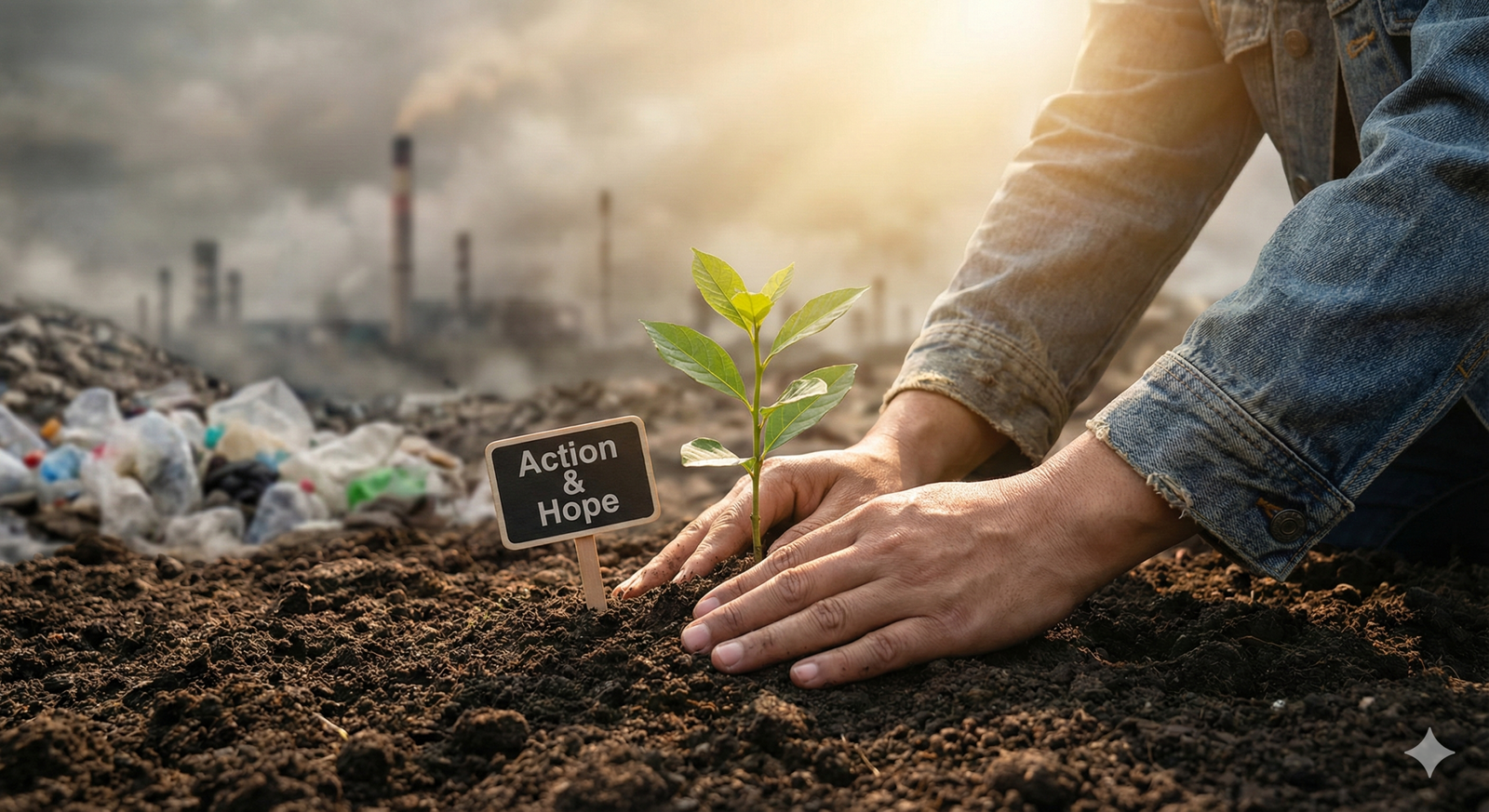
“Eco-Anxiety” and How to Turn It From Terror into a Power for Change
You open your phone in the morning, and the news floods in: floods in one country, wildfires devouring everything in another, and constant warnings about global warming. Suddenly, you feel a shortness of breath, a weight on your chest, and a terrifying question echoes in your mind: “What will happen to us? Is there even a future?”
If these feelings are familiar to you, you are not alone, and you are not exaggerating. You are suffering from what psychologists today call “Eco-Anxiety.”
This term is no longer just a metaphor for “loving nature”; it has turned into a real psychological phenomenon sweeping the world, hitting young people and teenagers specifically at their core.
In this article, we will understand this “new pain” and how to prevent it from paralyzing our lives.
Not Just “Fear”… It Is a “Rational Response”
Unlike other anxiety disorders that may stem from unreal delusions, psychologists view eco-anxiety as a “rational and natural response to a real threat.”
You are not imagining monsters under your bed; the monster is actually outside. This type of anxiety is prevalent among Gen Z and teenagers, because they feel they have inherited a sick planet and must pay the price for the mistakes of previous generations. This feeling generates a mix of anger, helplessness, and fear of the unknown.
Symptoms of the “Waterfall of Despair”
Eco-anxiety doesn’t stop at fear; it can develop into symptoms that hinder daily life:
- Constant Insomnia: Thinking about disasters before sleeping.
- Guilt: Self-flagellation when using a plastic bag or flying.
- Doomscrolling: Addiction to following bad climate news for hours.
- Emotional Paralysis: The feeling that “nothing matters,” leading to depression and resignation.
The Cure: “Action” is the Antidote to “Despair”
How do we deal with a problem the size of planet Earth when we are just small individuals? The psychological solution lies not in ignoring the problem (denial), nor in drowning in it (panic), but in turning this anxiety into “fuel for action.” Here is how:
1. Control Only What You Can
The biggest cause of anxiety is the feeling of helplessness in the face of the magnitude of the disaster. To break this helplessness, focus on your small “circle of influence.”
- You cannot stop the ice melting in the Arctic today, but you can reduce plastic consumption in your home, plant a tree in your neighborhood, or raise awareness in your circle.
- Psychological Rule: “Positive action, no matter how small, restores the brain’s sense of control and reduces stress.”
2. Connect with Nature, Don’t Just Mourn It
Instead of looking at nature as a dying “victim,” reconnect with its beauty. Go for a walk in the park, contemplate the sea, or sit under a tree. This connection reminds you why you are fighting for this planet, giving you psychological energy and inner peace instead of constant terror.
3. Join the “Tribe”
Isolation feeds anxiety. Look for local or online groups that care about the environment. When you see others sharing your concerns and working on solutions, the feeling of “I am carrying this burden alone” disappears, replaced by a sense of solidarity and collective hope.
Final Word: Your Anxiety is Proof of Your Humanity
Do not try to “cure” yourself of caring about the environment. This pain you feel is proof that you are a living human being, possessing empathy and awareness. The goal is not to stop caring, but to learn how to carry this care without it breaking your back. Turn your fear of the “end of the world” into energy to build a “new world.”