
When Time Stops at the Moment of Loss

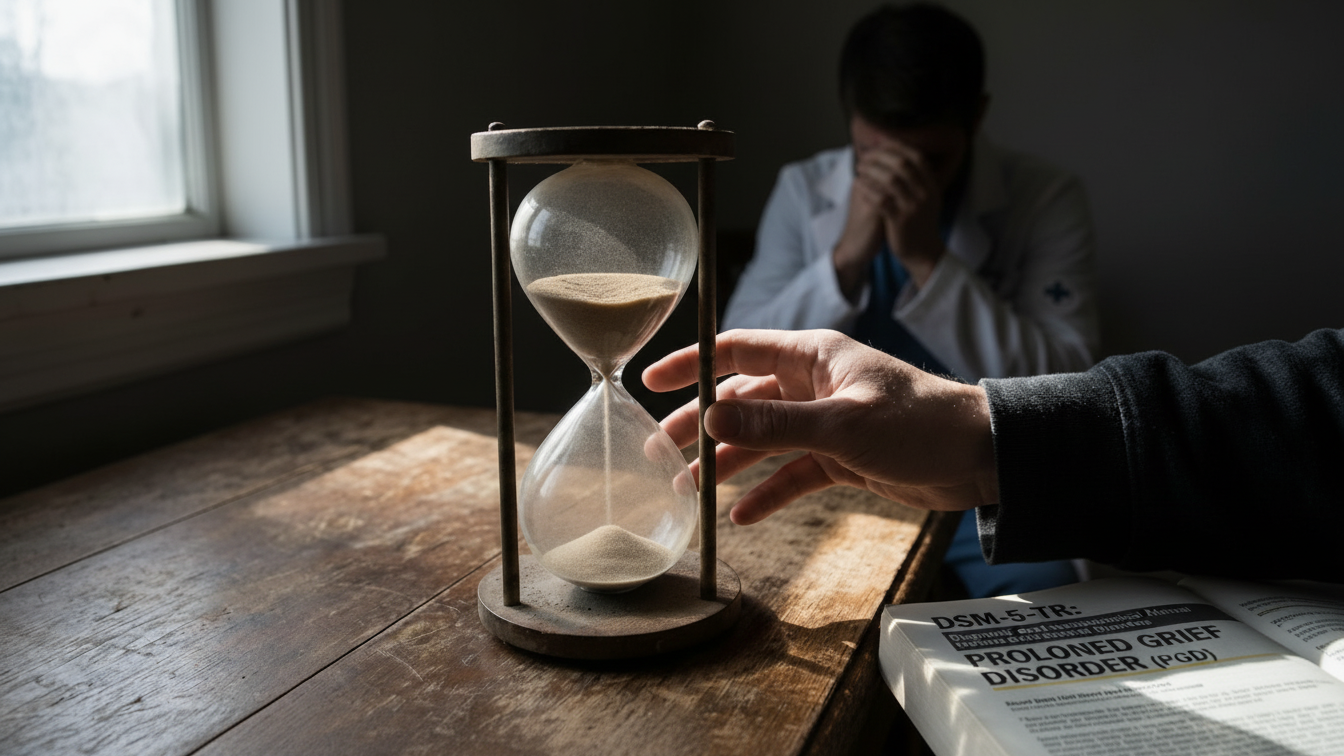
Medical Recognition of “Prolonged Grief Disorder”
We have long repeated the phrase “time heals all wounds,” and society has long treated grief as a temporary phase that ends with the passing of days. But what happens if days and months pass, yet the pain remains as fresh as if the loss happened yesterday?
In a historic update to the world’s primary psychiatric reference (DSM-5-TR), science has finally decided to do justice to those stuck in the vortex of loss, officially recognizing “Prolonged Grief Disorder.”
This article explains why this recognition is a lifeline for many, not just a new medical label.
What is “Prolonged Grief Disorder”?
It is a psychological condition distinct from the normal grief we all experience. In normal grief, we find ways to adapt and gradually return to life despite the pain. In “Prolonged Grief,” the person feels like a prisoner in the exact moment they lost their loved one.
To be medically diagnosed under the new update, specific conditions must be met:
- Duration: More than 12 months (for adults) or 6 months (for children) have passed since the death.
- Core Symptoms:
- Intense, persistent yearning for the deceased that disrupts daily life.
- Severe emotional pain (silent screams of the soul).
- A feeling that “a part of oneself has died” along with the lost loved one.
- Denial of reality or disbelief that the death occurred, even after a long time.
- Avoidance of anything that reminds them of the deceased, or conversely, excessive clinging to their belongings.
Why is this Update So Important?
Before this official recognition, doctors were often baffled, frequently misdiagnosing these individuals with “Major Depression.” Despite the superficial similarities, standard depression treatments (like traditional medication) often fail to help them.
The significance of this new classification lies in two points:
- Lifting the Stigma: Many feel guilty because they haven’t “moved on” as society expects them to. Medicine now tells them: “You are not weak, and you are not failing at recovery; you are suffering from a real medical condition that has a name and a cure.”
- Targeted Treatment: Recognizing the diagnosis has opened the door to developing specialized Grief Therapies. These focus specifically on accepting the loss and rebuilding meaning in life without the deceased, rather than just treating general depressive symptoms.
The Takeaway: Real Pain… Real Hope
The inclusion of “Prolonged Grief Disorder” in the DSM-5-TR is a message of compassion from the scientific community. It is an acknowledgment that some wounds are not healed by time alone; they require an expert hand to help the spirit heal, enabling the person to breathe and live again, keeping the memory without being killed by the pain.