
The Stubborn Child or the Little Leader?

Understanding Developmental Psychology and Channeling Your Child’s Energy
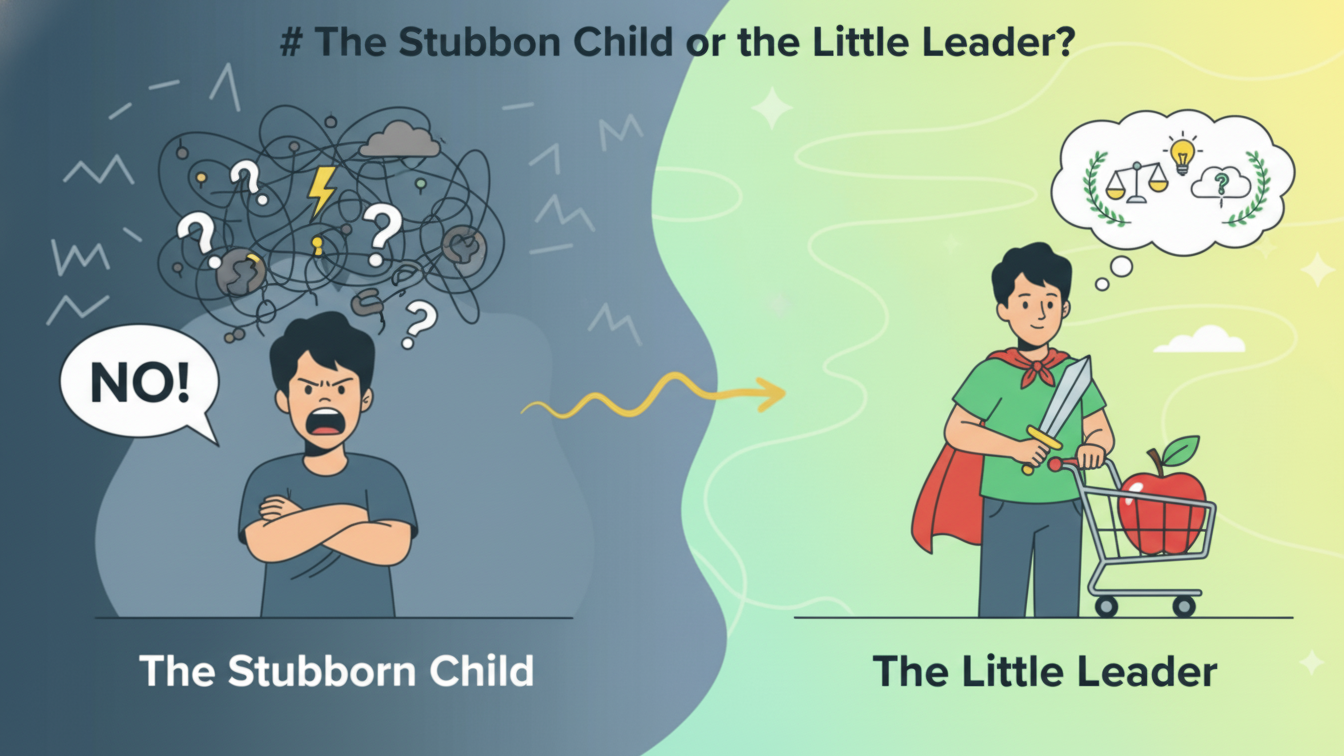
The scene is familiar to every parent: You are in a rush in the morning, you ask your child to put on their coat, and they give you that sharp look, cross their arms, and unleash that small word that shakes the foundations of the house: “NO!”.
In that moment, it is easy to feel frustrated and label your child as “stubborn” or “difficult.” But what if psychology told you that what you are seeing right now is nothing but the seed of outstanding leadership skills in the future?
In this article, we will change the lens through which you view things, to discover how to turn “annoying stubbornness” into “personal strength” that builds a promising future.
Stubbornness is Not a “Flaw”… It is a Stage of Growth
Before you try to “fix” your child, you must understand the psychology of what is happening inside their little mind. What we adults call “stubbornness,” psychologists call “Self-Assertion.”
- Between ages 2 and 4: The child begins to discover that they are a separate entity from their parents. The word “No” is their only way to draw boundaries and say: “I exist, and I have an opinion.”
- Between ages 4 and 7: They begin testing laws and authority to understand how the world works; hence the constant arguing.
A child who always obeys orders without question might be “comfortable” for parents now, but they may grow up to be someone who is easily led by others, unable to defend their opinion. The stubborn child, however, possesses will, persistence, and the ability to question—traits of leaders and innovators.
How to Turn “Stubbornness” into “Leadership”? (Smart Strategies)
The goal is not to break your child’s will (as this destroys their personality), but to “refine” and direct it. Here is how to do that:
1. Give Choices, Not Commands
Leaders hate receiving direct orders, and so does your child. Give them a sense of control through closed choices.
- Instead of: “Put on your clothes now!” (A direct command that provokes resistance).
- Say: “Do you want to wear the red shirt or the blue one?” (A choice that gives them authority, but the result is the same: they will get dressed).
2. Be Calm as a Mountain
When your child erupts, they are testing the solidity of boundaries and your ability to contain them. If you scream back, you teach them that “a loud voice is the way to win.”
- Get down to their level (eye contact), and maintain a firm but calm tone. When they see that their outburst doesn’t shake you, they will stop using it as a weapon.
3. Channel Their Energy into a “Mission”
The stubborn child loves to feel important. Instead of entering a conflict, turn them into an “assistant.”
- If they refuse to sit in the shopping cart, tell them: “I need a strong assistant to push the cart with me and pick out the good apples.” Here, you satisfy their desire for leadership and responsibility positively.
4. Listen to Them ( The Negotiation Mindset)
Sometimes, stubbornness is just a message saying: “You don’t understand me.” Before imposing your opinion, say: “I hear that you want to play now and don’t want to take a bath, that upsets you, right?” Once the child feels their feelings are heard and validated, their resistance drops by 50%, and you can then negotiate a solution.
Conclusion: You Are Raising an Adult for the Future
Always remember, your mission is not to make your life easier today by making your child obedient like a machine, but to build a strong, independent, and self-confident human for a tomorrow where you won’t be by their side. That stubbornness that exhausts you today is the fuel that will make them refuse to surrender to failure and defend their principles when they grow up.
Embrace the “Little Leader” in your home, and teach them how to lead with wisdom, not with screaming.